Can You
Hear Me Now?
is a sculptural project that reclaims the story of Antonio Meucci, the Italian immigrant credited with inventing the first telephone. Despite his contributions, Meucci’s role was largely erased from history, overshadowed by Alexander Graham Bell and the narratives that privilege certain inventors over others.
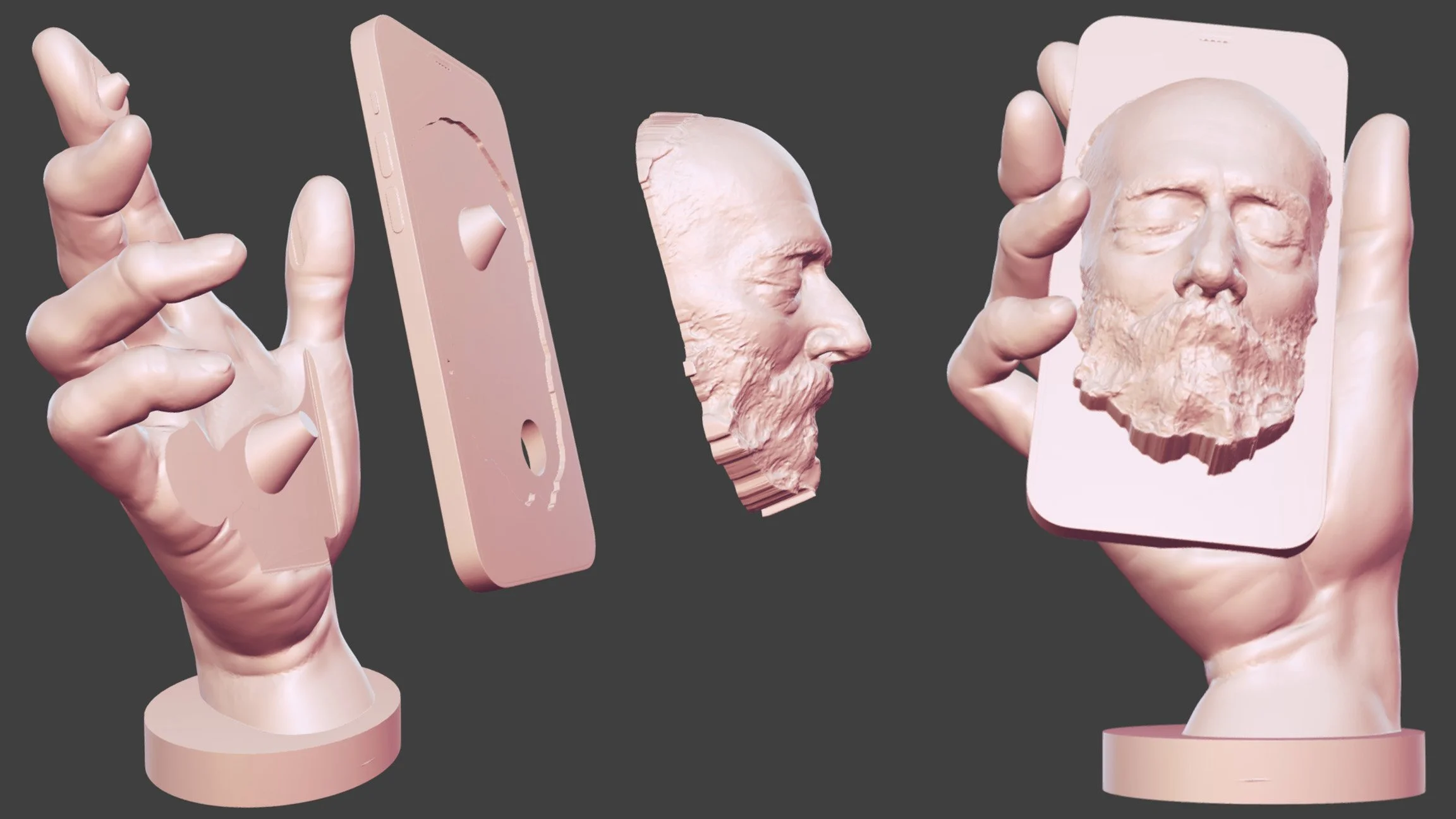
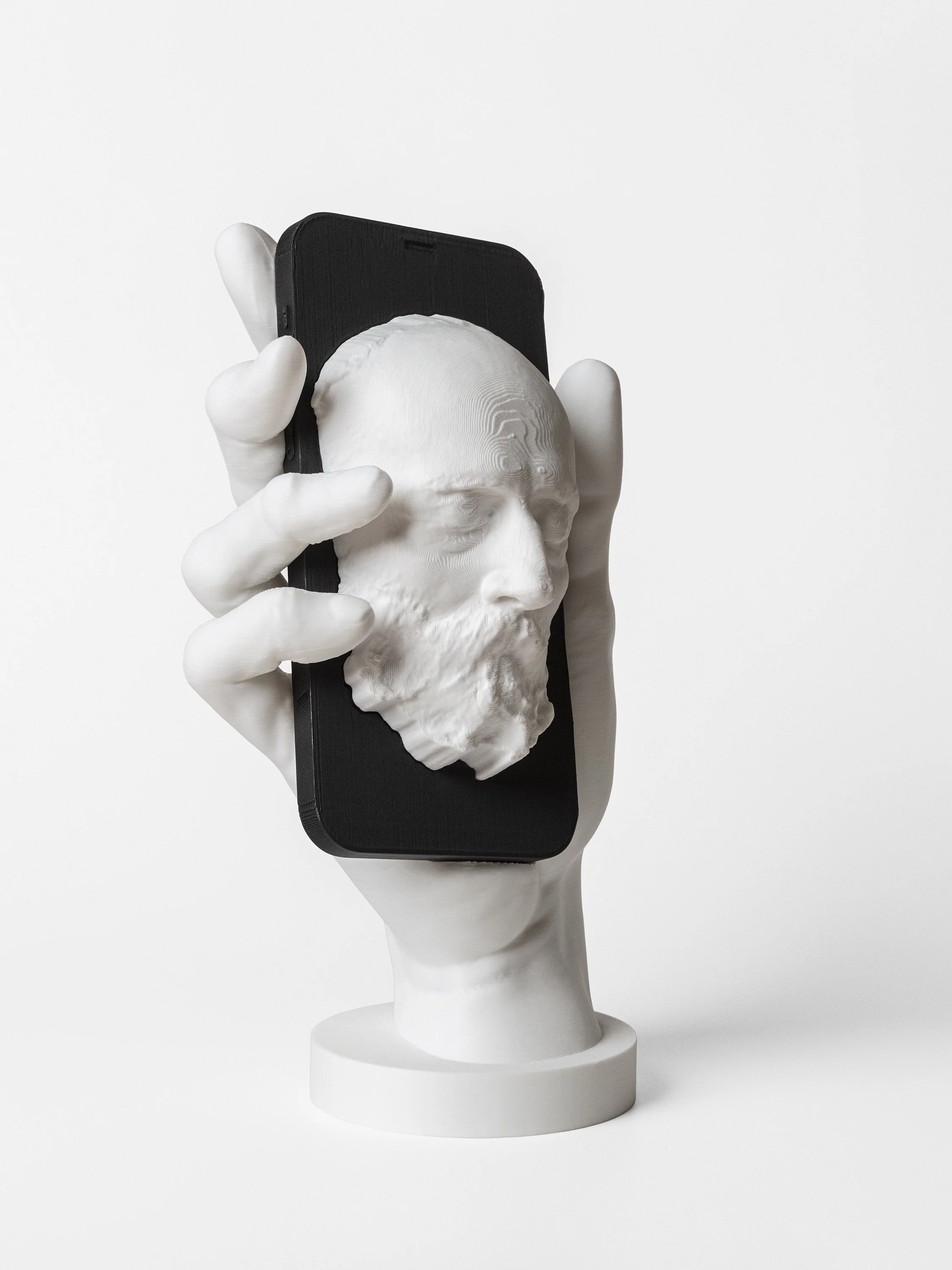
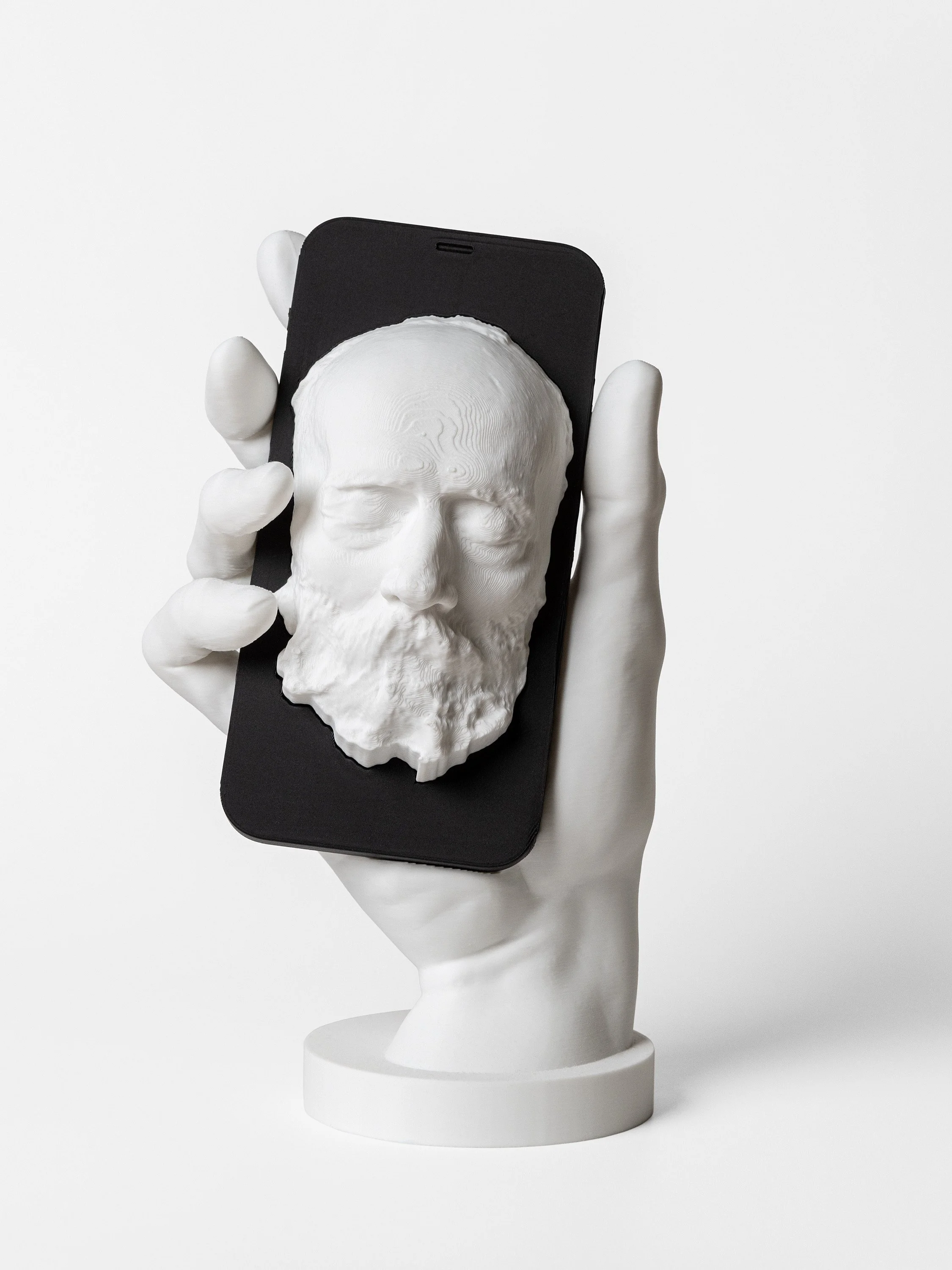
The work takes shape from a 3D scan of Meucci’s plaster death mask, preserved at the Garibaldi-Meucci Museum in Staten Island. This uncanny source material becomes the basis for a new portrait sculpture—one that bridges historical artifact, digital reproduction, and artistic intervention. By working from the imprint of Meucci’s actual face, the project attempts to restore both presence and dignity to a figure long silenced in public memory.
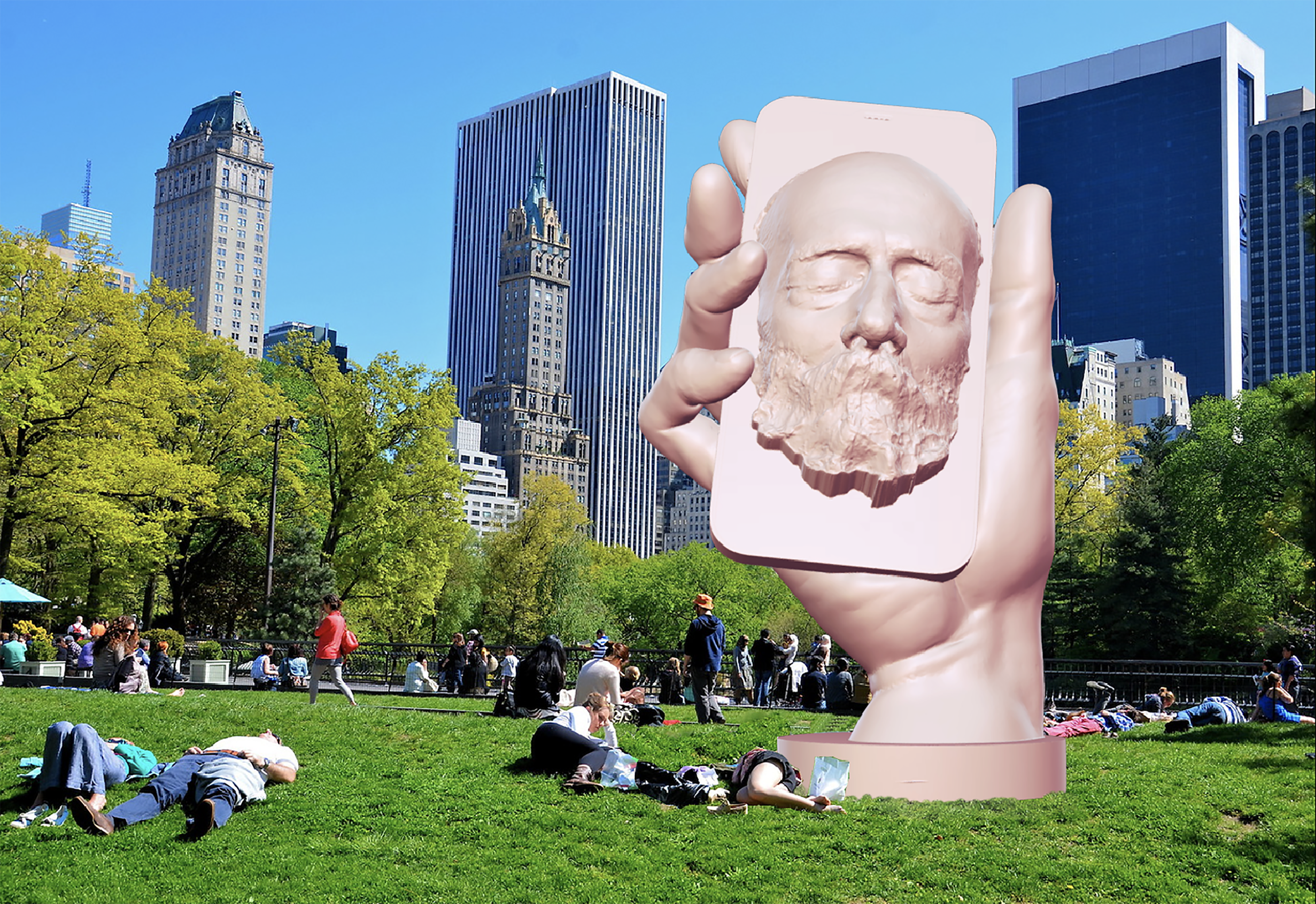
At over 8 ½ feet tall and weighing approximately 8,600 pounds, the sculpture asserts itself as a public monument in both scale and gravity. Meucci’s likeness is held within the grasp of a massive hand,
emerging through the screen of a smartphone—an object that connects his 19th-century invention to the devices that now define global communication. This juxtaposition highlights both the fragility of recognition and the durability of immigrant contributions to American life.
The title, Can You Hear Me Now?, echoes Verizons (formerly the Bell-Atlantic Co.) ubiquitous advertising slogan while underscoring the irony of Meucci’s historical invisibility. It points to the gap between invention and recognition, between voice and who gets to be heard.
Beyond commemoration, the project asks larger questions about cultural inheritance and public memory. Who is remembered, who is forgotten, and what role can art play in shifting those narratives? In reanimating Meucci’s likeness, the sculpture functions as both a monument and a meditation: a reminder that immigrant contributions are woven into the fabric of American life, even when history tries to speak over them.